

News
Commodore Frank Bainimarama Disbands Fiji’s Great Council of Chiefs
March 15, 2012 Nicola  |
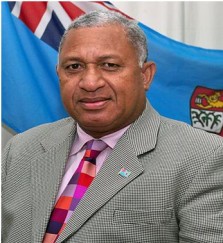
The Great Council of Chiefs, a product of Fiji’s “colonial past” is disbanded after 130 years by Fiji’s military ruler.
The tradition that was set up under British colonial rule in the 1870s will no longer have a body of 55 tribal leaders to discuss affairs and provide local services.
Commodore Frank Bainimarama, who seized power in 2006, announced the disbanding of the council, saying:
“The Great Council of Chiefs is a product of our colonial past and Fiji must now focus on a future in which all Fijians are represented on the same basis.”
However, Ratu Naiqama Lalabalavu, who is one of the highest ranking chiefs, told reporters that the local leaders played an important role and the council should be preserved.
He told ABC Radio: “I think it’s a sad day for the chiefs, especially for the institution.
“I only hope that some good sense could have prevailed so we could have talks as to how best we could find ways to ensure that the institution remains.”
Sir Arthur Gordon, a British colonial governor, created the council in 1870. Its purpose was to allow prominent local leaders to have a role in governing the nation and their role was one of significance, particularly after Fiji gained independence in 1970, though the council had a hostile relationship with Bainimarama’s military regime.
Bainimarama is believed to be planning to exclude the council from a new constitution due to be drawn up within the year. He has repeatedly delayed elections, now due in 2014, which led to Fiji’s suspension from the Commonwealth.
Despite this, supporters of the council are determined to keep the chiefs role as they say it has promoted stability during Fiji’s recent turbulent history.
Jenny Hayward-Jones, a Pacific expert with the Lowy Institute in Sydney, agrees. She told Telegraph reporters that the chiefs will continue to have a role in traditional society even if their legal powers are removed.
The council “should be a matter for the people to decide upon,” she said,”not a matter for decree.”
By Kate Wilson
[Image courtesy of Own Work]

