
NI Leader’s IRA Past Scrutinised
 |
October 4, 2011 TheFreshOutlook  |
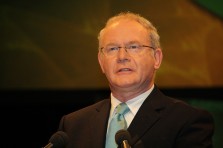
The Irish presidential election has raised questions about the past IRA membership of Northern Ireland’s Deputy First Minister, Martin McGuinness.
The candidacy of Northern Ireland’s Deputy First Minister, Martin McGuinness, in the Irish presidential election has led to increased scrutiny of his paramilitary past. Mr McGuinness is a former member of the Provisional IRA, a militant organisation that waged a 30-year campaign against Northern Ireland’s position within the UK.
In a recent testimony to the Saville Inquiry, Mr McGuinness admitted that he was the IRA’s second-in-command in Derry on Bloody Sunday. He added that he left the IRA in 1974.
Mr McGuinness maintains that his IRA membership was a bi-product of Catholic subjugation in Northern Ireland, which was then controlled by a Protestant hegemony.
However, many within Ireland’s political establishment reject this assertion and point to Ireland’s current President, Mary McAleese, as an example of a Northern Catholic who rejected IRA violence, despite the fact that her family had been burned out of their home by unionist mobs.
Such a contrast has led members of the Irish government to express dismay at the prospect of Mr McGuinness becoming president, with one minister saying that having a “terrorist” as head of state would negatively affect the country’s foreign investment.
Whilst rubbishing such claims, Mr McGuinness has also been keen to highlight his role in Northern Ireland’s political process. As a senior figure in Sinn Fein, Mr McGuinness was a key figure in convincing the IRA to give up their violent campaign and commit to the political process.
Northern Ireland’s government is divided between representatives from both the Unionist and Nationalist communities. This arrangement has led to the co-operation of previously sworn enemies in the governance of its divided society; an arrangement which has seen Mr McGuinness become the country’s deputy leader.
It is this role that Mr McGuinness has been keen to highlight in his campaign for the Irish Presidency.
“I think people see me as someone very much associated with political agreement and, probably more than anything else, been able to build a relationship with loyalist leaders,” he said in an interview with The Independent.
Mr McGuinness is running for the presidency of the Republic of Ireland. The election, which is being contested by six candidates, will take place on October 27. The role of president is mainly ceremonial and carries little political power.
By Dermot Tobin
[Image Courtesy Of Sinn Fein]

